Wednesday, May 20, 2026

Seen

I am the part of her that watches.
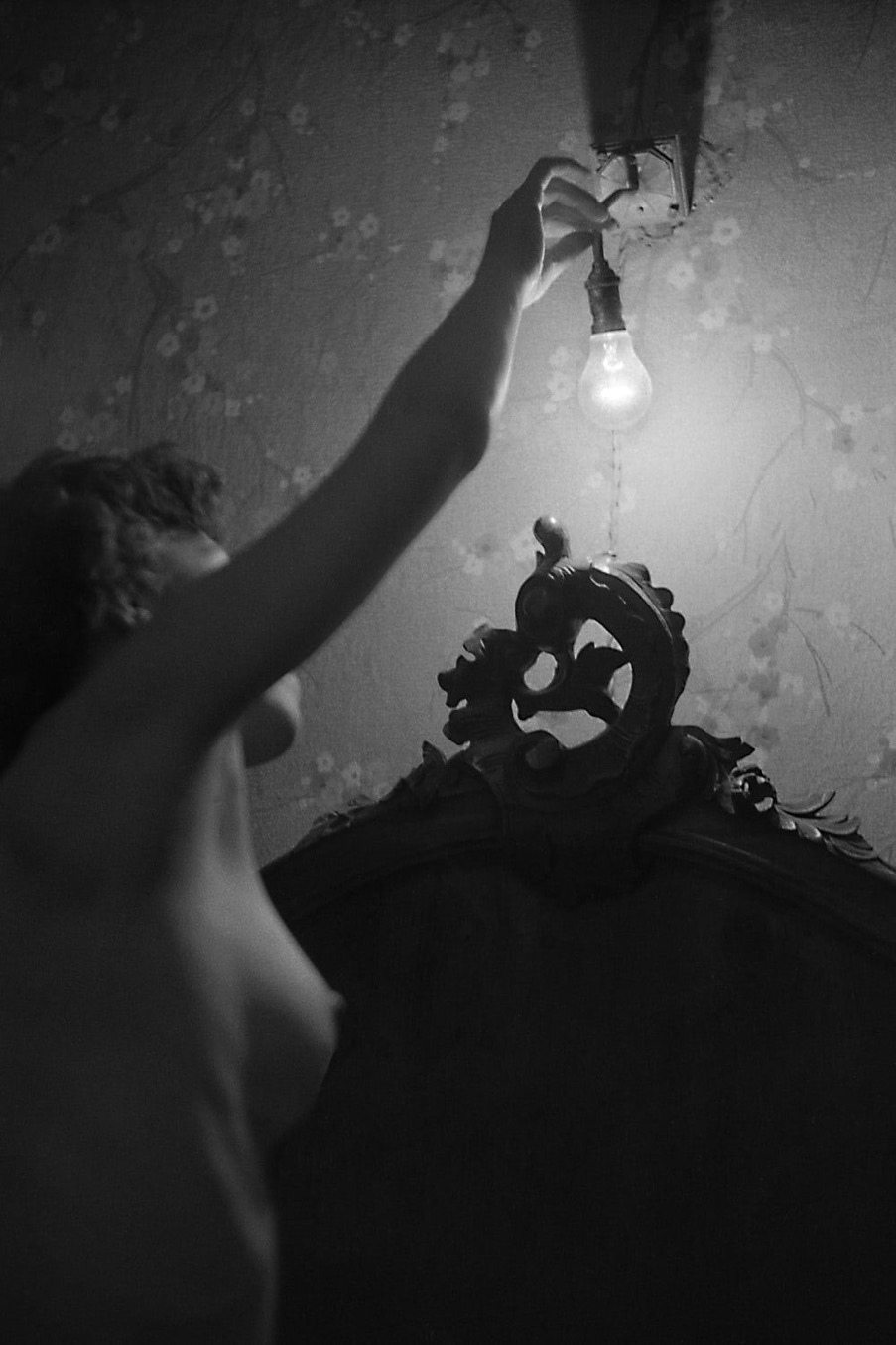
She does not know I am here —

she is busy with the bulb,

reaching up into the uncertain glow,

twisting, adjusting,

trying to get the light right.


She has always been trying

to get the light right.


Not vanity. 

Something closer to fear —

the suspicion, quietly learned,

that what cannot be seen clearly

cannot quite be trusted to exist.

Han would recognize her.


The transparent society

does not demand confession.

It only makes opacity

feel like failure,

like something to fix,

like a bulb that keeps flickering

when it should just stay on.


And so she reaches.

She is not posing.

That is the ironic part.

She has merely internalised the angle,

the quality of light,

the difference between shadow that flatters

and shadow that conceals too much.


The camera is not in her hand.

It is in her mind now.

It has been for years.

McLuhan knew:

the medium does not carry the message,

it becomes the nervous system.


She does not perform for the screen.

She has become

someone for whom

being seen well

is the same thing

as being well.


But I remember the dark.

I remember when this room

could hold ambiguity without apology,

when she could sit in half-light

and not reach for anything,

when the flicker was just a flicker

and not a problem,

when mystery was not

a failure of illumination

but a place she could go

and still be herself,

more herself,

without anyone watching.


Something was kept there.

Not a secret. Not a flaw.

Just the unmanaged interior —

the self that does not perform

because it does not know

it is being seen.


She has almost forgotten

how to go there.

The bulb steadies.

The room sharpens.

She looks around, satisfied,

everything legible,

everything in its proper light.


I flicker once

in the place she no longer looks.

I am still here.

I have always been here.

I am the darkness

she keeps trying to fix.


Saturday, May 16, 2026

Face Mask

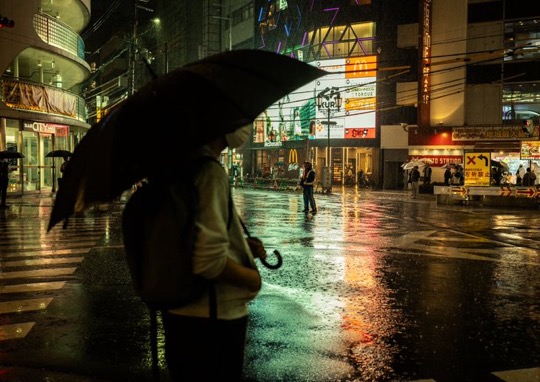
​The street has gone quiet in a strange, emptied way, and we move through it behind masks that do more than cover the mouth and nose. They seem to hold something of us back. They mark a boundary, a soft border between the self and the pressure of the crowd.


Wearing a mask changes the way the face exists in public. The face was once the main currency of social life — the place where we offered politeness, warmth, concern, or control. So much depended on expression, on being readable. But the mask gives us a way to step back from that demand. There is something almost freeing about it. With the lower half of the face hidden, we are no longer required to smile on cue, to perform ease, to keep arranging ourselves for strangers. The mask becomes a literal version of what Jung called the persona: the social face we present to the world.


But once that social face starts hiding, something else happens too. The self gets a little more room to retreat. We pass one another carefully, eyes meeting only briefly, then looking away. There is caution in that glance, but also distance. As Sherry Turkle might say, it begins to resemble being alone together. The city no longer holds us in the same way. It reveals how fragile that sense of togetherness always was.


And yet though the mask shelters the body, it can also make the spirit feel sealed off. The other person is reduced to a pair of eyes, and the full humanity of the face is partly lost. That loss is real. But so is the odd freedom it brings: the freedom to move through public space without being fully claimed by it, to exist without constant exposure.


So the masked city becomes a place of partial presence. No one is entirely absent, but no one is fully available either. We keep our distance, not only for safety, but because disappearance has become a kind of skill. The streets remain quiet, and in that quiet there is both loss and relief.

Thursday, May 14, 2026

Live Modelling

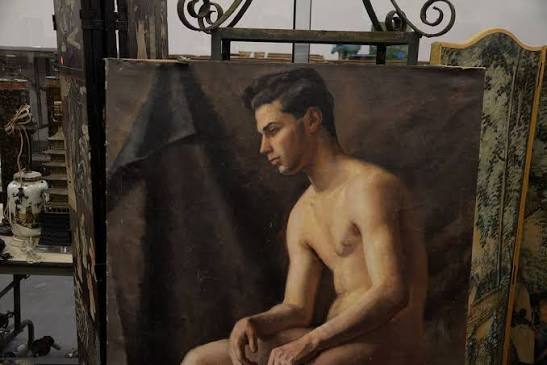
Inside the studio, time settles like dust or heat, under the hard glare of a single lamp. The young man sitting there looks detached from ordinary details of biography. In that light, he becomes sharper and more abstract: ribs, throat, hip, shadow, breath. His body is turned into a landscape of lines and weight. And yet, even in stillness, he cannot fully become an object. The body keeps living. It keeps warming the room, lifting and lowering with breath, refusing to disappear into mere form.


That is the strange contract of live modeling. It sits somewhere between art, commerce, and vulnerability, without ever fully belonging to any one of them. The artist looks with a kind of disciplined intensity, measuring the body against canvas, treating flesh as if it could be translated into line and color. John Berger’s distinction between the naked and the nude matters here: the naked body is simply itself, while the nude body is the body made available to the gaze. In the studio, that transformation is always in motion.


But looking is never as clean as it seems. To observe a body for hours is not a neutral act. Attention begins as technique, then slowly takes on a charge of its own. The artist may try to keep desire out of the room, to turn the body into structure and light, but some of the human heat always remains. It enters the atmosphere. It gives the work its tension. Without that hidden pressure, the painting would risk becoming too neat, too clinical, too dead.


What makes the studio moving is this unstable balance. The model offers nakedness, but not complete surrender. The artist seeks form, but cannot entirely escape feeling. Between them is a silence that is both professional and intimate, both protected and exposed. The final image is a record of anatomy. It is also a trace of the encounter itself — of the fact that one person had to sit still while another tried to make meaning out of flesh, and that neither could fully avoid the force of being seen.

Wednesday, May 13, 2026

The Triangle

The red light here does more than illuminate the scene. It changes it, thickening everything until the two women seem less like separate figures and more like one shared pulse of crimson and shadow. The touch of lips against a neck feels quiet, almost weightless, and yet the air around it is charged. There is always a third presence in the room, even if invisible: the gaze from the edge of the frame.


That third point is the male imagination. It is not physically inside the scene, but it shapes the way the scene is felt. Laura Mulvey’s idea of the gaze helps explain this tension: looking is rarely innocent. It is often tied to power, to the wish to arrange the world into those who look and those who are looked at. But when the frame holds two women in an intimate exchange, something breaks in that logic. The man is no longer the center of the event. He becomes a witness to his own exclusion.


That is what makes the desire here so uneasy. The fascination is not only erotic in a simple sense. It is also about distance, interruption, and lack. Eve Kosofsky Sedgwick’s ideas about indirect desire help name this: desire often moves sideways rather than straight towards its object. In this scene, the man’s attention is drawn not because he is being invited in, but because he is being kept out. The intimacy is strangely public because it seems to offer access while refusing it.


What he desires, then, is not only the women themselves. He desires the boundary they create. He wants to know whether he is central to the scene or only hovering at its margin, imagining significance where none is granted. The red light intensifies that uncertainty. It blurs the line between attraction and discomfort, between wanting and being unnecessary.

Tuesday, May 12, 2026

Holocene

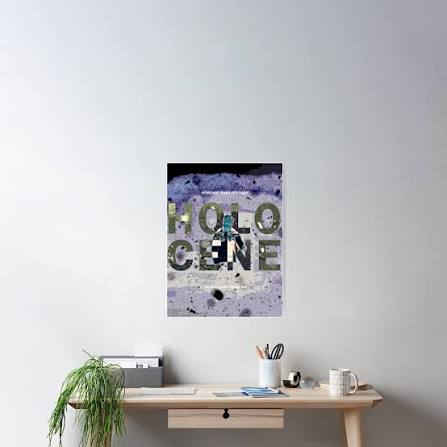
The opening of Holocene feels like a cold morning made audible — brittle, bright, and wide open. Then Justin Vernon sings, And at once I knew, I was not magnificent, and what could sound like defeat instead lands like release. In a culture that constantly asks us to build ourselves into something larger, shinier, and more legible, that line feels radical.


So much of modern life runs on self-inflation. We are pushed to perform our lives, curate our identities, and treat every moment as potential evidence of our importance. Even the private self is expected to show up in public, polished into something shareable. The pressure is relentless: be interesting, be visible, be unforgettable. It is exhausting to live inside that demand.


That is what makes the song’s humility so striking. And there is an important distinction worth making here: being insignificant in the sense of being overlooked is not the same as being insignificant in the sense of standing before something far larger than yourself. A crowded room can make you feel erased. A mountain, or a stretch of geological time, makes you feel small in an entirely different way — strangely freeing rather than diminishing. One kind of smallness is humiliating while the other is clarifying.


What Holocene offers is relief from the burden of being the center of everything. It lets the self step back without collapsing. It suggests that not every life needs to be magnificent in order to matter — and that the relief begins precisely when we stop demanding that of ourselves. Once the ego opens its grip, the world becomes larger again: more textured, more mysterious, less trapped inside our own performance.


That is part of why the song endures. It speaks to a quiet exhaustion many people carry now — the fatigue of having to mean so much, all the time. Vernon’s voice names and moves through the fatigue.


In the end, Holocene is not about diminishing the self. It is about giving the world back its scale.

Sunday, May 10, 2026

Blue Lycra

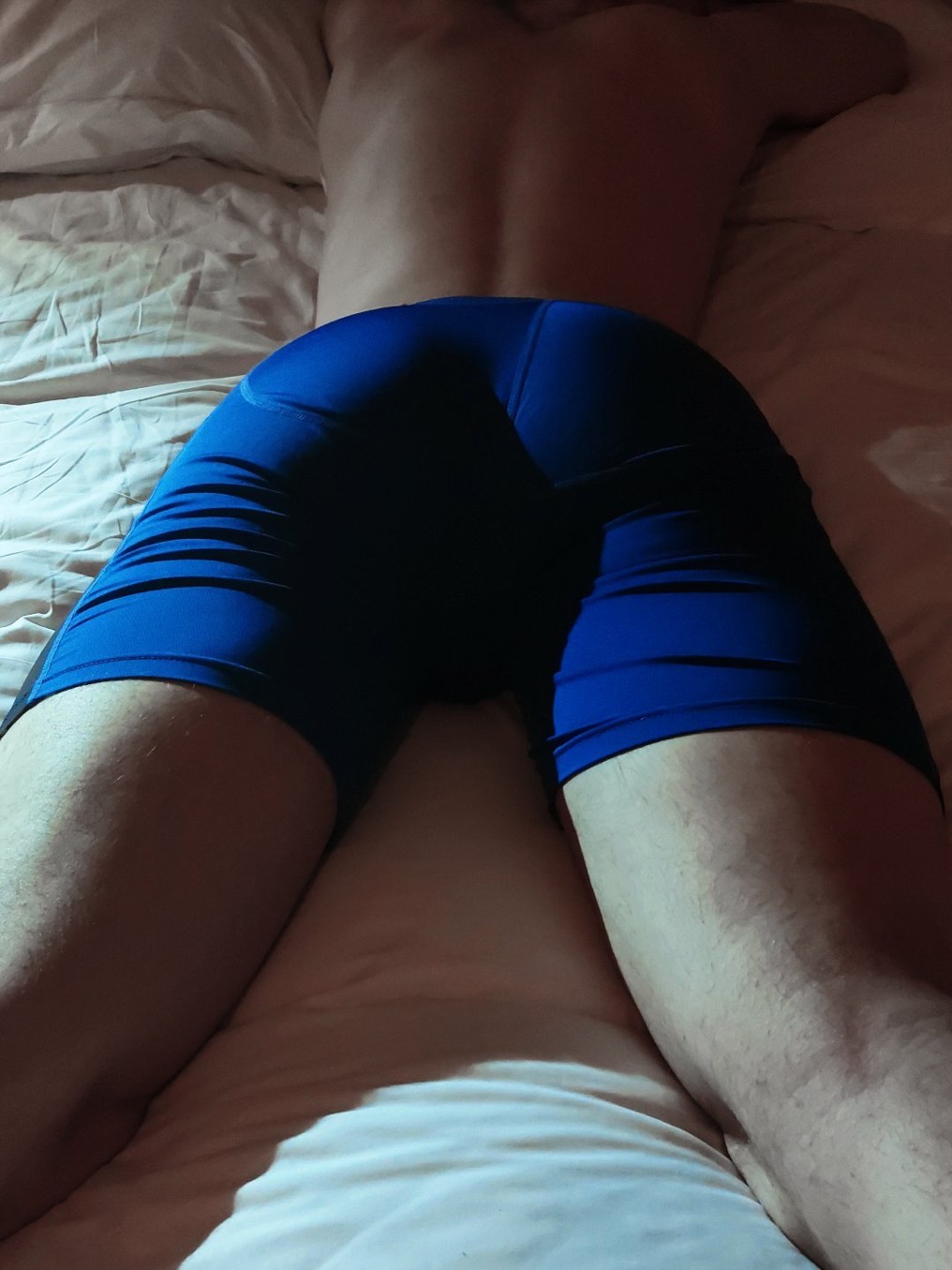
The late afternoon light settles across the bed like a warm weight, and the figure lying there feels both relaxed and deliberate. Face down, wrapped in a thin blue Lycra layer, he looks at first like someone resting. But the longer you look, the more it becomes clear that this is not accidental ease. It is a body aware of itself, aware of how it takes up space, aware of the fact that it can be seen.


For a long time, the masculine body was treated mainly as something functional — built for work, endurance, labor, usefulness. It was expected to act, rather than appear. To be looked at was often framed as a loss of authority, a kind of reversal in which the man became an object rather than the subject of the gaze. But that old arrangement has changed. Now the male body is increasingly presented as something aesthetic, something composed, something worth staging. The curve of a back, the shape of a shoulder, the line of a leg — these are signs of strength. They are also signs of display.


That shift changes the meaning of looking itself. Laura Mulvey’s idea of the gaze helps explain how visual power once belonged so clearly to the observer. But here the body is not passively receiving attention. It is participating in it. It is arranged to be watched, and in that arrangement, it gains a different kind of control. Michel Foucault might call this a modern discipline of the body: a way of making identity through posture, visibility, and self-presentation.


What makes this interesting is that it also changes masculinity’s emotional register. Earlier cultures often kept desire towards men hidden, coded, or softened under the language of sport, heroism, or discipline. But in a world shaped by image and performance, that distance shortens. The male body can now be openly curated, openly desired, openly aware of itself as image. And that creates a strange tension: the body still carries the old language of strength, but it now also lives inside the new language of being looked at.


That is the quiet force of the scene. The room stays ordinary, the light keeps fading, but the blue Lycra holds its place like a signal. It marks a masculinity that is no longer only about doing. It is also about appearing, knowingly, in the gaze of others.

Tuesday, May 5, 2026

Street Theatre

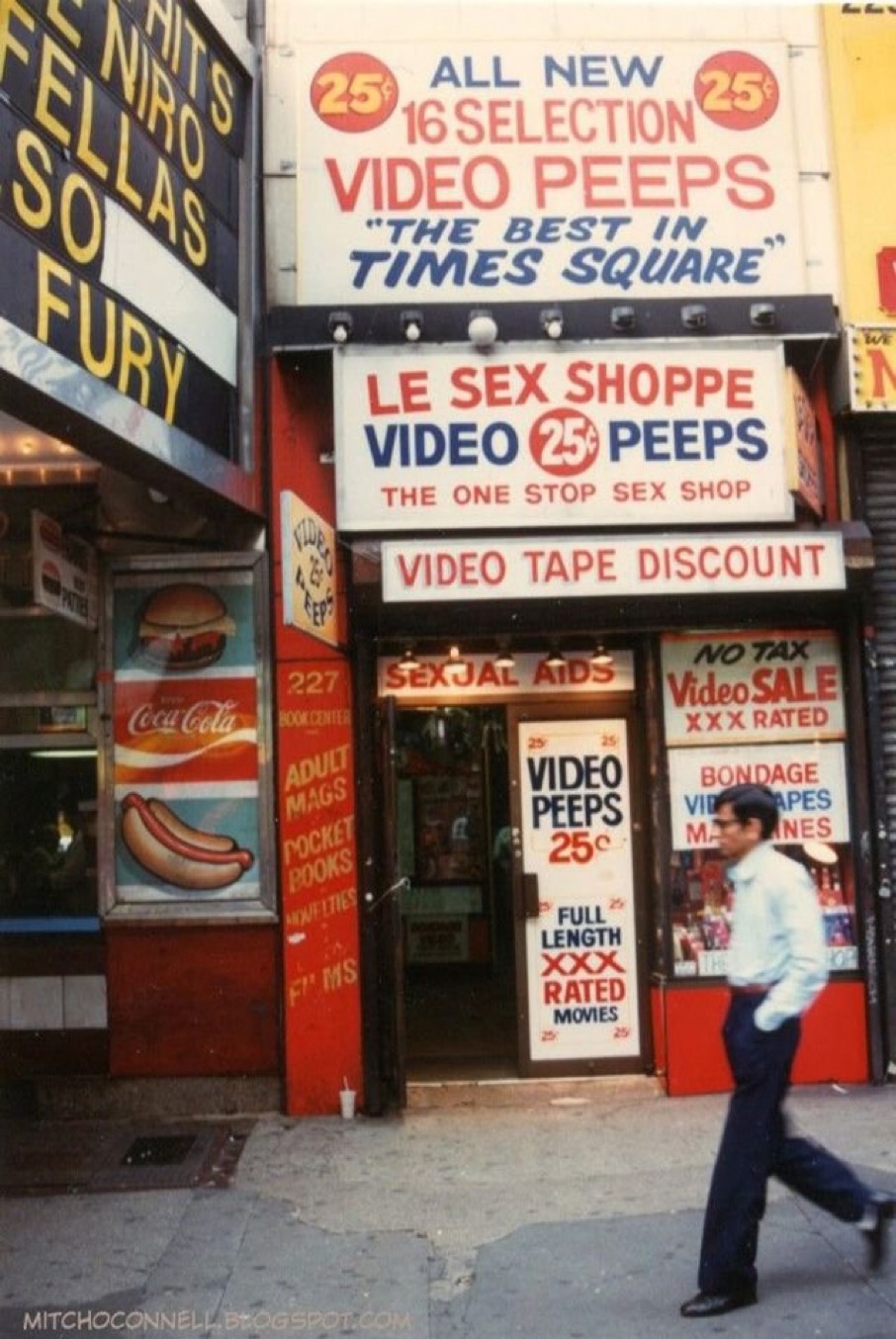
​The street ends being theatre. It feels more like corridor now, something people move through without really entering. In the gray light of late afternoon, a man walks past a block that seems to belong to another age — a fading strip of the late twentieth century, still hanging on in patches and signs. On one side, a neon sex shop glows in half-shadow, carrying the old charge of secrecy and transgression. Next to it, a worn Coca-Cola mural clings to the brick, all bright nostalgia and commercial faith. One promises the body; the other, sweetness. One speaks of appetite, the other of desire. Both wait, and both seem strangely abandoned.


The man does not look. He keeps walking, inwardly sealed, as if the street were only background and not an invitation. That, perhaps, is the real quiet death of public life: not that the buildings disappear, but that the gaze withdraws.

Richard Sennett wrote about the fall of public man, about how we once had to learn how to meet one another in shared space. That old social skin has worn thin. The street no longer provokes us, embarrasses us, or even really interrupts us. Desire and consumption have moved elsewhere — not necessarily into the home, but into the private enclosure of the digital mind. When everything can be summoned without touch, the storefront becomes a kind of ghost, still standing but no longer fully alive. The sex shop and the soda ad are just relics now, signs from a time when surfaces still pointed towards lived experience.

Baudrillard helps name the mood: the map has swallowed the territory. The man’s indifference is saturation. Why stop for the bold sign when he carries an entire customized world in his pocket? The street has been smoothed over by private attention. What used to be friction is now just passage.

And something important disappears in that retreat. Yes curiosity, but also the currency of the public good — the sense that a city is made by shared looking, shared hesitation, shared presence. Without that, the street becomes a place to bypass rather than inhabit. The man keeps walking, unremarkable, almost ghostlike, through a graveyard of signs. The deepest change in the city may not be glass towers or new roads, but this quieter thing: the human eye learning not to see what is right in front of it.

Every day it Rains

The net is almost in. That is the tragedy of it — not the storm itself, but the timing, the particular cruelty, of the sky choosing this ...