Thursday, July 16, 2026

Hotel

A name. A payment. A signature.

In return: a room.
In return: the brief, clean permission
to be someone else
Augé called these places non-places —
spaces that exist outside belonging,
that ask nothing of your history,
that do not accumulate
the slow sediment of lived life,
the photographs, the arguments,
the drawer that sticks,
the particular creak
on the third stair
that everyone in the house
has learned to step around.

The hotel has no third stair.
The hotel has no drawer that sticks.
The hotel is remade each morning
by hands that don’t remember you,
the sheets pulled tight
over whatever the night contained,
the surface restored
to its original blankness,
ready for the next inscription,
indifferent to the last.

Hopper knew this light —
the way it falls in rooms
at a specific hour,
too honest,
illuminating nothing
but the fact of being here,
alone,
in a space that was designed
for everyone
and therefore
for no one.

The window is always slightly wrong.
The mirror is always slightly
in the wrong place.
You are always slightly
a stranger to yourself
in a hotel room,
which is either horror
or gift,
depending on what you brought
with you
through the revolving door.

In Varanasi the hotel
breathes differently.
The arched windows
hold the river
like a painting
that refuses
to stay still —
the ghats below
move with the ancient traffic
of the living and the dead,
the smoke rising
from burning grounds
in the particular way
that smoke rises
when it carries
more than combustion.

Here the guest is not
a temporary occupant.
but the latest phantom
in a procession
that began before
the hotel existed,
before the city
before the concept of guest
had been separated
from the concept
of pilgrim.

The Ganges does not care
about your booking confirmation.
The river was here
before check-in
was invented.
It will be here
after the last
revolving door
stops turning.

The hotel on the ghats
is not a non-place.
It is an altar of witness —
for the temporal world
pressed against the timeless,
the clean linen
brushing ancient stone,
the minibar
casting its small cold light
in a room
where windows
open to eternity.
The guest stands at that window
in early morning
and smoke drifts in
and for a moment
categories dissolve —
tourist and mourner,
seeker and the merely lost,
the one who came to see
and the one who came
to be changed —
all briefly
the same figure,
standing at the same window,
watching the river
conduct its uninterruptible
business with time.

In Agra the hotel
performs a different cruelty.

Through the window,
at the right hour,
in a particular light
of early morning
or long dusk,
the Taj Mahal
hangs in the distance
like an argument
the air is making
about permanence —

a tomb built
to outlast time,
to say that love
is the one human project
worth building in marble,
worth orienting
an entire geometry towards,
worth the lives
of twenty thousand hands.

And here, inside,
the guest rehearses opulence
in rooms designed to suggest
that luxury is natural,
that the chandelier
is always yours,
that the marble floor
beneath your feet
is merely the floor
you were meant to walk on —

all of it temporary,
all of it borrowed,
all of it returnable
at checkout,

while through the window
the white dome
holds its position
against morning sky
with the absolute composure
of something
that has already won
its argument
with disappearance.

The hotel says:
for tonight, this is yours.
The Taj says:
nothing is yours.
The guest stands between them
in their complimentary robe
and tries to hold
both truths at once.

The corridor at three in the morning
is a different country.

The numbered doors
recede in both directions
into a perspective
that feels less architectural
than philosophical —
all these rooms,
all these briefly occupied
rectangles of privacy,
all these lives
that touched this space
and left no mark
the cleaning staff
couldn't resolve
by morning.

Somewhere a door closes.
Someone has arrived
or is leaving
or could not sleep
and has decided
the corridor
is preferable
to their thoughts.

The jasmine, the old wood,
the industrial linen —
the hotel's true smell,
the one beneath
the room spray,
the one that accumulates
across seasons and decades
in the curtains,
in the walls,
in the particular quality
of the silence
at this hour —

it is the smell
of all the lives
that passed through
and were briefly
held here,

then released,
and continued,
somewhere,
as lives do,
carrying whatever
the room gave them
or failed to give them
or took away
in the night
when they were finally
still enough
to notice.

The home preserves.
The hotel suspends.

That is the whole
strange bargain —
you cross the threshold
and the weight
of who you have been
does not follow you in,
not entirely,
not all at once.

You are allowed,
for a few nights,
to exist
in the gap
between the person
who signed the register
and the person
you might,
in a different life,
in a different city,
under a different name,
have become.

Most guests
do not become
that other person.
Most guests
sleep, and eat,
and attend meetings,
and pack their bags
in the particular
efficient sadness
of departure,
and pass back through
the revolving door
into the life
that was waiting.

But the room
held the possibility.
The room always holds
the possibility.

That is what
we are paying for,
finally —
not the bed,
not the view,
not the chandelier,
not even the window
with its improbable
cargo of river
or dome or darkness —

but the temporary,
beautiful,
entirely convincing
fiction

that we have not
yet become
everything
we are going to be.

Sha zhu pan


Its Monday. She is smiling.

Of course.

The smile is the product, the display-front,
the first pitch—
perfected now to the decimal point
of maximum engagement.

The pig across her shoulders does not know.
That is the whole facade.

You do not tell the pig.
You only make it feel chosen.

The market does not sleep.
It cannot afford to.

Fluorescent bulbs flicker above wet stalls
in that particular frequency that lives just below headache,
and LED billboards cycle their virtual faces —
influencers who have never sweat, never smelled of frying oil,
never carried anything heavier than the curated weight
of self-exposure.

Tuesday is here for sale.
The dumplings. The data. The attention. The feeling of being seen
by someone who means it.

Especially that. Especially the feeling
of being seen
by someone who means it.

That is the most expensive item in the bazaar.
That is what the patient ones
are selling.

Sha zhu pan. Slaughter the pig.

But first —
and this is the genius, this is the cold
elegant brutality of it —
first you fatten.

You do not rush. Rushing is for amateurs,
for the crude ones who do not understand
that loneliness has a ripening time.

Time pleases, then fattens.

Wednesday. You send the message at the right hour —
late enough to feel intimate, early enough to feel considered.
You remember the small things:
the name of the dog, the city where childhood happened, the wound mentioned once
but never followed up by anyone else.

You follow up.

The pig begins to glow with the specific warmth
of being known.

Oh to be seen!

But here is what the poem must not let you forget:

this is not only a story about fraud.

This is a story for the entire operating system —
the foundational logic that has migrated
from the criminal underground into the feed,
into the app, into the office, into the bedroom,
into the face you put on
before you open the door.

Everyone is fattening something. Everyone is running
some version of the long game —
the friendship maintained for its utility,
the vulnerability performed for the intimacy it purchases,
the attention given not as gift
but as investment,
patient, compound, waiting for the moment
the emotional weight is sufficient

like a fat savings account
for extraction.

We did not invent this in the digital age.
But the digital age gave it scale, gave it speed, gave it the infrastructure
of infinite reach and zero consequence,
gave it the smile that never tires,

The woman stands in the neon rain
and the pig is immaculate.

Fed on consistency. Fattened on the dopamine
of chosen-ness,
on the particular nutrition of feeling less alone
in a market this loud, this bright, this indifferent
to the individual heartbeat.

What did it cost her to become this?

That is the question the image will not answer.
That is the question the image is not
interested in.

Behind every perfect crime there is a supply chain —
a place where the smile was trained out of fear,
where patience was learned from someone
who practiced it on her first,
where the market logic entered early
and arranged the furniture of the self
around the transaction.

The scammer was once the pig.

This is not absolution. It is topology —
the shape of a world where the logic of extraction
moves through bodies like a current,
entering here, exiting there,
while the market hums and the notifications ping
and the billboards cycle their perfect faces
above the rain.

The most heavily rationed commodity is trust.

Not because it is rare. Because it is expensive
to produce
and cheap to counterfeit , and the market
cannot tell the difference
until the weight is right, and the moment comes
and the knife

is so sharp
you do not feel it, until after.

Thursday. She is still smiling.

The pig is still warm.

The fluorescents flicker in their low parasitic frequency
above the wet stalls of the world,

and somewhere a notification arrives —

and you look down,

and it is someone who remembered
the small thing you mentioned once,

and you feel it, the warmth,
the chosen-ness,

and you do not think
about the knife.

Nobody does.

That is the design.
That is the whole
terrible
design.


Sunday, May 24, 2026

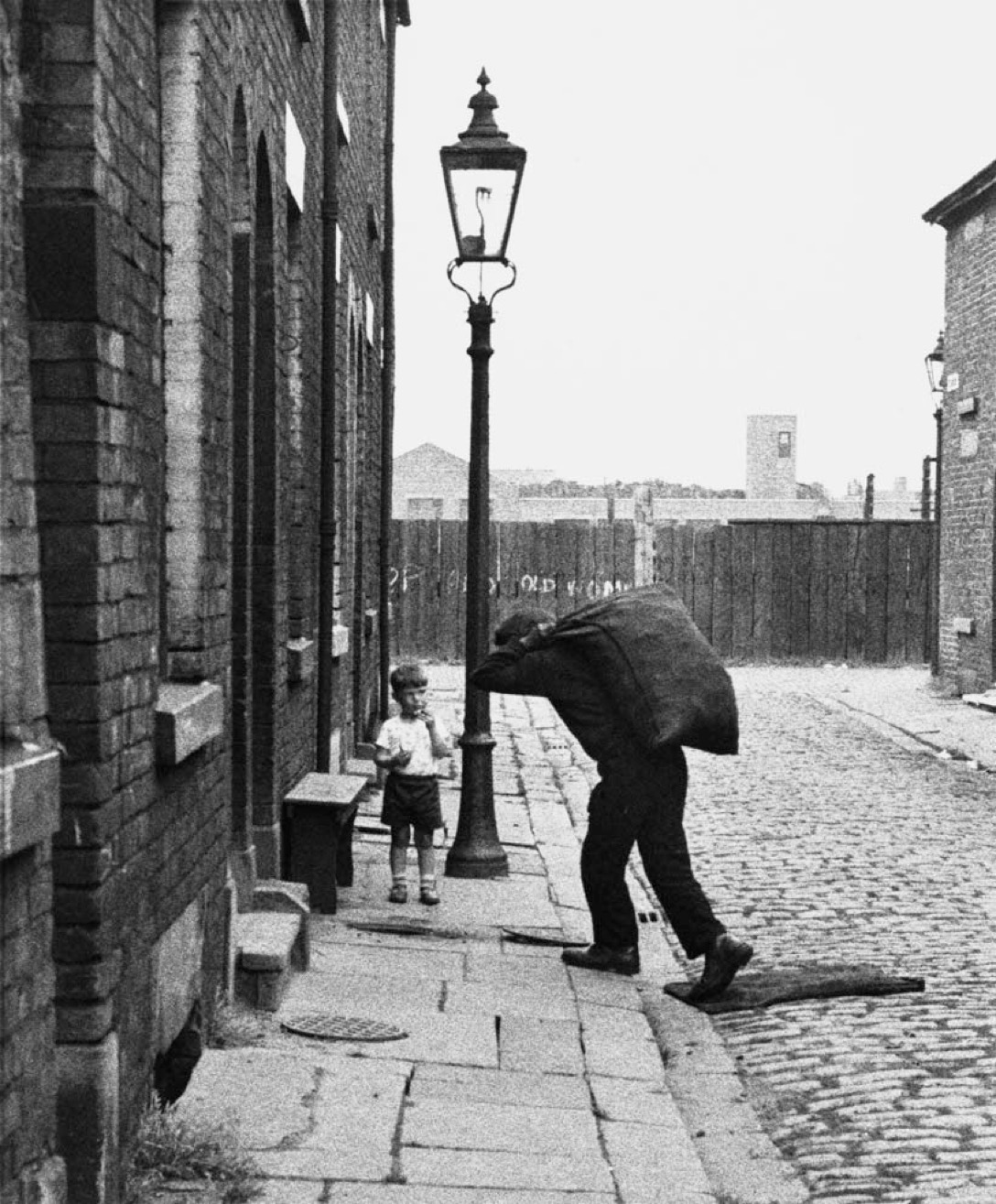
Narrow Brick Road

They meet in the middle
the way all reckoning does —
without announcement,
without preparation,
on an ordinary street
that did not know
it was about to mean something.


The man walks forward

because forward is the only direction

the weight allows.

The sack has its own grammar now,


its own pull on the spine,

its own way of deciding


the angle of the world.


He has forgotten

what it felt like

to stand straight

without compensating.


The boy has stopped.

Not from fear.

From that older instinct —

the one that precedes language,

that recognizes a threshold

without being able to name it.


He looks up the way you look

at weather coming,

at something large

that is not yet yours

but will be.


What does he see?

A man with a sack.

A body that has learned

to carry.

Something impressive

in the set of the shoulders,

something in the eyes

that looks like knowledge

and also, faintly,

like the place where

something used to be.


The boy is looking at his future

and the man is looking

at his origin —

that these encounters

happen everywhere,

that we spend our lives

moving between

what we have not yet become

and what we have

already surrendered.


The sack is not dramatic.

That is the important thing.


It was not placed there

all at once,

not by catastrophe

or cruelty.


It arrived the way adulthood arrives —

one reasonable thing at a time,

each addition making sense

in the moment of its taking on,

each commitment

a choice that was also

a small closing of a door

somewhere behind you

that you did not hear

because you were already

looking forward.


This geometry —

the child who watches labor

from the outside

and the man who has forgotten

he was ever on the outside.


The distance between them

is not years.

It is accumulated yeses.


What does the man see?


A body that still belongs

entirely to itself.

Legs that go at their own speed.

A face that has not yet learned

to arrange itself

for the occasion.


Not innocence —

he is too tired for sentimentality —

but something he recognizes

the way you recognize a place

you lived before the renovation,

when everything was still

unfinished and possible

and slightly inconvenient

in ways that felt like freedom.


He does not envy the boy.

Not exactly.

He knows what is coming,

knows the sack is not a punishment

but life,


knows that the weight

came attached to everything

that mattered.


But for one second,

in the particular light

of this particular street,

he would like to put it down.

Not forever.

Just long enough

to remember

what his spine felt like

before it learned

to compensate.


The boy steps aside.

The man passes.


The brick road continues

in both directions,

narrow as it always was,

wide enough for one

moving body

at a time.


Neither looks back.


Or maybe the boy does —

just once,

quickly,

the way you look

at something

you do not yet have words for

but your body

has already begun

to remember.

Wednesday, May 20, 2026

Looking up and back

The sky, circling in blue and orange has
turned into an alchemist?


Elias has stopped trying to name it.

Orange into blue into something

that has no colour yet,


the colour of light that arrives

near the end of things


and seems to know it,

seems to be

watching back, in greys.


Elias keeps walking.

This is the whole discipline now —

to keep walking

under a sky of vapid judgment

and not turn away 

and not explain yourself

to anyone,

not even to yourself,

specially not to yourself

not anymore.


We are not

the rational creators

we tell ourselves we are.

We do not choose towards joy.


We choose away from the face

we are afraid to meet later —

the older self

standing at the back of every room

we ever entered,

arms folded,

already knowing how it ends.


Elias chose some things for that reason.

The safe harbor.

The door not opened.

The words not spoken


on an evening in another city

that he can still locate exactly

in his body

thirty years later.


He was trying to protect himself

from regret.

He did not know

that unlived life

accrues its own interest,


His fear was right —

to choose is to lose

what was not chosen,

but not to choose

is to lose everything,

including the self

that might have done the choosing.


The unchosen accumulate.

That is what no one tells you.

They do not disappear

when you decide against them.


They stand at the edges of the field

in weather like this,

patient,

unhurried,

waiting for the colours

to catch up.


The mistakes are not

the worst of it.

The mistakes had weight,

had consequence,

had the dignity of having

actually happened.

You can walk the perimeter of a mistake.

You can know its dimensions.


It is the unlived things

that have no edges —

the person you might have become

in a different city,

the love you almost let

be as large as it wanted to be,

the room you stood outside

and did not enter

because entering felt

too much like falling.


The sky deepens.

He does not look up.

He has made his peace

with most of it,

or made something

that resembles peace

from a sufficient distance,

which may be

all that is available now.


The field is wide.

Elias is small in it.

He knew this would happen —

not the field exactly,

but the feeling,

the late light,

the sense of being

a figure in a landscape

that was always larger

than his plans for it.


He keeps walking

because the body still insists,

because stopping

would require a reason

and Elias has outlasted

most of his reasons,

because somewhere ahead

the field ends

and he would like to see

where.


Not with urgency.

Not with fear.


Just with the quiet

faithful attention

of someone who has learned,

too late and exactly on time,

that the present moment

was always the point,

that the sky was always

doing something extraordinary

above whatever field he crossed,


and that he looked up

far less often

than he should have.

Hotel

A name. A payment. A signature. In return: a room. In return: the brief, clean permission to be someone else Augé called these places no...